About the Journal
Editors-in-Chief
Dr. Anamika Pandey
Dr. Mohd. Kamran Khan
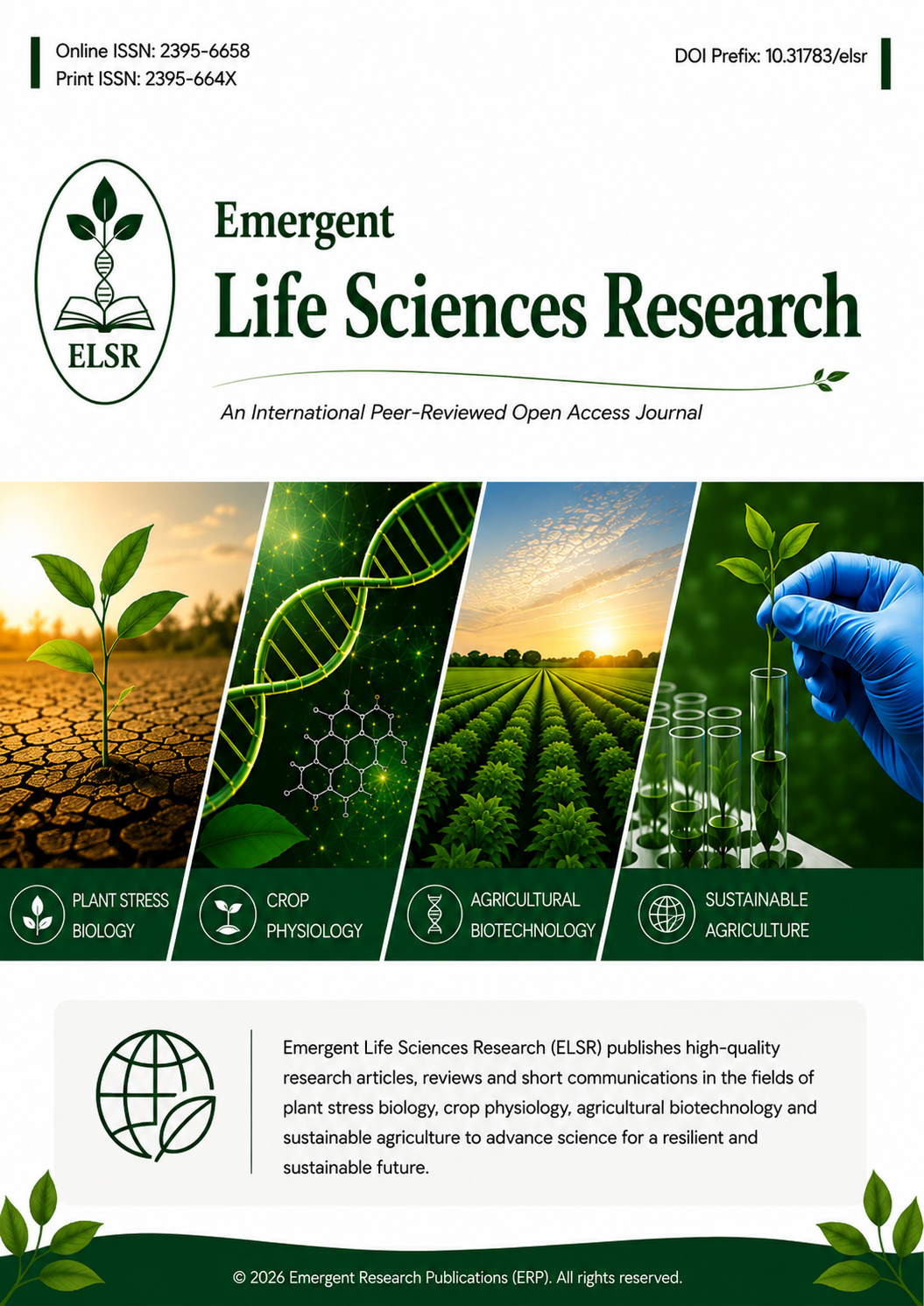
Emergent Life Sciences Research (ELSR) is an international, peer-reviewed, open-access journal dedicated to publishing high-quality research in plant stress biology, crop physiology, agricultural biotechnology, and sustainable agriculture.
The journal provides a scientific platform for researchers to disseminate original research articles, reviews, and short communications that advance understanding of plant growth, development, and adaptation to environmental challenges. ELSR particularly emphasizes research addressing abiotic stress factors such as drought, salinity, heat, cold, and nutrient imbalances, and their impact on crop productivity and resilience.
Journal Metrics
Submission to Final Acceptance Time (Median): 66 Days
Acceptance to Online Publication (Median): 5 Days
Total Downloads: 62,498
Why publish with ELSR?
International Peer Review Process
Open Access Publication Model
Crossref DOI Assignment
Global Visibility & Indexing (Google Scholar, etc.)
Rapid and Ethical Editorial Handling
Focused Scope in Plant & Agricultural Sciences
Worldwide Author Community
Article Processing Charges (APC)
Current Publication Charges
As part of the journal's transition and development strategy, Emergent Life Sciences Research (ELSR) is currently waiving all publication charges.
Current APC (Until Further Notice)
Indian Authors: INR 0
International Authors: USD 0
No submission, processing, or publication fees are charged during the current waiver period.
Editorial Focus (Effective from July 2026)
The journal has refined its scientific focus to strengthen coverage of plant stress biology, crop physiology, agricultural biotechnology, and sustainable agricultural systems. While the journal's archival content reflects its broader historical scope, future submissions are primarily encouraged in plant stress biology, crop physiology, agricultural biotechnology, plant genetics, and sustainable agricultural systems.
Current Issue
Vol 12, Issue 1, 2026
Published:
2026-06-30
Articles


